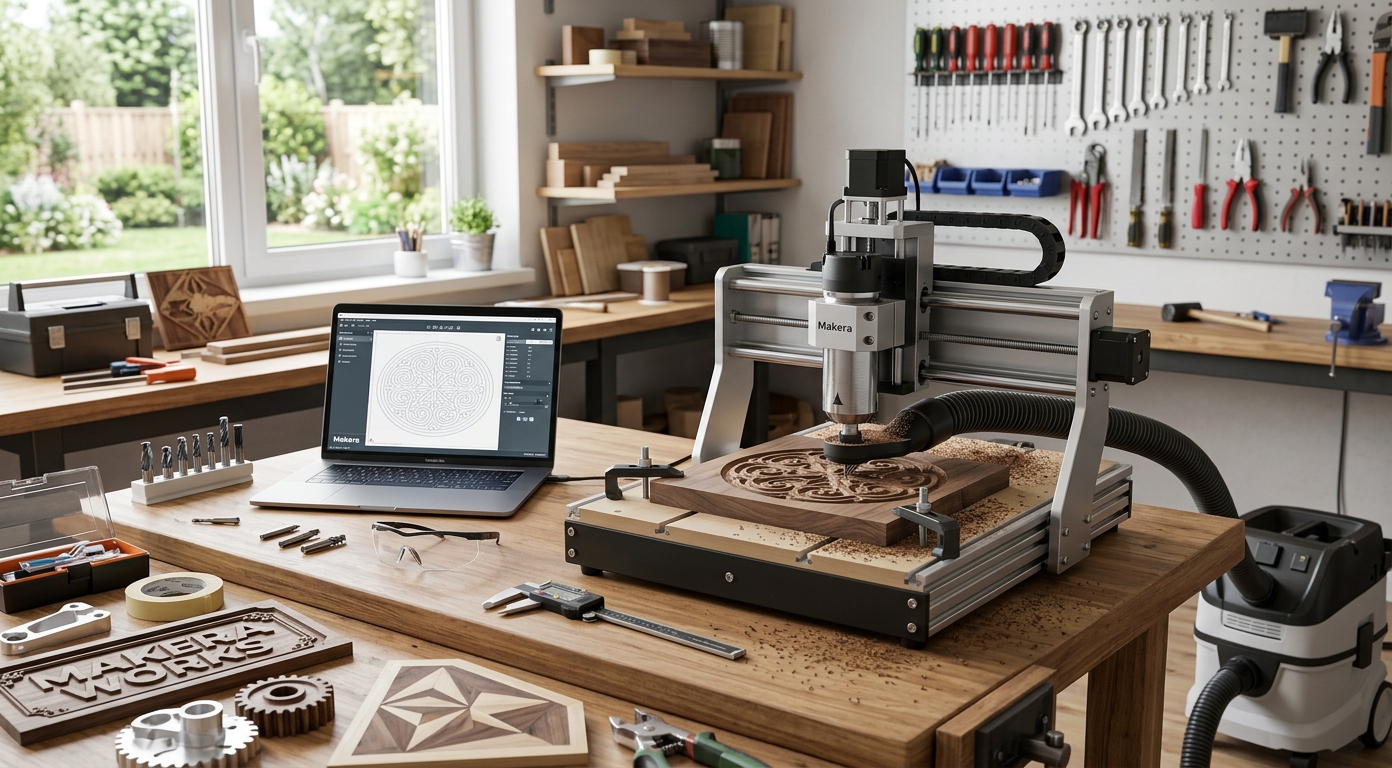
Creating precise parts for DIY projects can become frustrating when traditional tools deliver inconsistent results. Small measurement errors, rough edges, and wasted materials can quickly ruin your work. Fortunately, Desktop CNC Machines help improve accuracy and simplify detailed machining tasks. Whether you enjoy woodworking, metalworking, or prototyping, Makera offers options worth exploring for your workshop. With suitable equipment and careful preparation, you can transform creative ideas into accurate, repeatable results.
Common Challenges When Working on DIY Projects
DIY enthusiasts often struggle to achieve professional-looking results with basic workshop tools. Although manual methods work well for simple tasks, intricate designs require greater precision and consistency. Consequently, complex projects can demand excessive time and repeated adjustments.
Hobbyists commonly face these challenges:
-
Inconsistent accuracy: Manual cutting and drilling can produce uneven dimensions across multiple parts.
-
Limited design flexibility: Complex shapes and detailed patterns can prove difficult to create manually.
-
Material waste: Incorrect cuts and measurement errors can damage expensive materials.
-
Time-consuming production: Repeating operations manually can slow down larger projects.
-
Skill limitations: Beginners may struggle to achieve clean, consistent results with unfamiliar tools.
These problems can discourage creators from attempting ambitious projects. Therefore, choosing suitable equipment can significantly improve workshop productivity.
Why Traditional Tools Sometimes Fall Short
Traditional tools remain valuable for many tasks. However, they cannot always deliver the repeatability that detailed components require. Several factors contribute to these limitations. First, manual operations depend heavily on hand control and measurement accuracy. Even experienced makers can introduce small errors during repeated cuts. Additionally, complicated designs often require multiple tools and careful repositioning. Certain materials also demand specific cutting speeds and tool settings. Without suitable equipment, achieving clean edges becomes more challenging. As project complexity increases, these limitations can affect quality and production time. Desktop CNC Machines address many challenges by following programmed instructions. Instead of relying entirely on manual movement, these machines control cutting paths according to prepared designs. Consequently, users can produce repeatable components when they configure their equipment correctly.
Practical Ways to Improve Machining Results
Before investing in new equipment, improve your existing workflow. Simple adjustments can reduce errors and help you complete projects more efficiently.
1. Prepare Your Designs Carefully
Start by creating accurate digital drawings or compatible CAD files. Then, check every dimension before sending your design to the machine. Furthermore, review toolpaths to identify potential cutting problems.
2. Choose Suitable Materials
Different materials require specific tools, speeds, and cutting strategies. Therefore, match your materials to your machine's capabilities. Beginners should practice with affordable materials before attempting expensive projects.
3. Secure Your Workpieces Properly
Loose materials can shift during machining and damage finished components. Instead, use appropriate clamps or fixtures to stabilize each workpiece. Meanwhile, ensure the cutting tool clears clamps and other obstructions.
4. Use the Correct Cutting Parameters
Cutting speed, feed rate, and cutting depth influence machining quality. Incorrect settings can cause rough surfaces, tool wear, or inaccurate dimensions. Therefore, begin with manufacturer-recommended settings and adjust them carefully.
5. Maintain Your Equipment
Regular maintenance helps preserve consistent performance. Clean machine components, inspect cutting tools, and check fasteners periodically. Additionally, follow the manufacturer's instructions for lubrication and maintenance.
Choosing CNC Milling Machines for Your Workshop
Once you improve your workflow, consider whether a dedicated machine could expand your capabilities. CNC Milling Machines use rotating cutting tools to remove material according to programmed instructions. Depending on their specifications, these machines can support projects involving wood, plastics, and certain metals.
However, not every machine suits every workshop. Before purchasing, evaluate these essential factors:
-
Working area: Ensure the machine accommodates your typical project dimensions.
-
Material compatibility: Confirm that its construction, spindle, and tooling support your intended materials.
-
Precision: Review positioning accuracy, repeatability, and overall construction quality.
-
Software compatibility: Choose equipment that works with your preferred design and machining software.
-
Ease of use: Look for accessible controls, clear documentation, and helpful learning resources.
-
Workshop requirements: Consider available space, power requirements, noise, and dust management.
For hobbyists, compact equipment can provide useful machining capabilities without requiring an industrial workshop. Nevertheless, verify the specifications before assuming a machine can handle demanding materials or advanced operations.
Why Consider Makera for Desktop CNC Machines?
Finding equipment that balances capability, usability, and workshop space requires careful research. Makera offers a starting point for exploring Desktop CNC Machines designed for makers and creative projects. When comparing available models, focus on your intended tasks rather than appearance alone. Consider whether you need intricate engraving, accurate component fabrication, or versatile machining across different materials. Additionally, examine the working area, supported materials, spindle capabilities, software workflow, and included accessories. These details help determine whether a machine matches your current skills and future ambitions.
CNC Machines for DIY Projects can support various applications, including:
-
Creating custom wooden ornaments and decorative panels.
-
Producing prototypes for product development.
-
Machining personalized signs and engraved designs.
-
Fabricating small components for creative builds.
-
Exploring repeatable cutting and engraving techniques.
However, results depend on the machine, material, cutting tools, design, and operator experience. Therefore, compare specifications carefully before making your decision.
Benefits of Upgrading Your Workshop Equipment
The right CNC setup can transform how you approach creative projects. Instead of repeating manual operations for hours, you can automate compatible cutting paths and focus more attention on design.
Consider these potential benefits:
-
Improved repeatability: Programmed movements help produce consistent parts across repeated jobs.
-
Greater design freedom: Digital workflows make intricate shapes and personalized designs easier to plan.
-
Better workflow efficiency: Saved programs can reduce repetitive setup and machining work.
-
More opportunities to learn: CNC machining develops useful skills in CAD design, toolpaths, and fabrication.
-
Expanded project possibilities: Suitable equipment helps you explore new materials and ambitious designs.
Nevertheless, automation doesn't eliminate every challenge. You must still prepare accurate designs, choose suitable tools, secure materials, and operate equipment safely. Furthermore, beginners should learn emergency procedures and use appropriate protective equipment.
Make a Smarter Choice for Your DIY Workshop
Choosing suitable machining equipment starts with understanding your projects, materials, and available workspace. Although traditional tools remain useful, Desktop CNC Machines can provide greater repeatability and design flexibility for compatible applications. First, compare machine specifications and identify the features your projects require. Next, learn proper setup techniques and maintain your equipment regularly. Finally, explore Makera's available options to determine which features match your goals. With thoughtful planning, you can invest in equipment that supports your creativity and helps you approach future DIY projects with confidence.