Choosing the right kitchen knife can feel surprisingly difficult. New West KnifeWorks offers quality options for different cooking needs. A dull blade can slow preparation and make simple tasks frustrating. Meanwhile, poorly balanced knives can make longer cooking sessions uncomfortable. Additionally, many home cooks struggle with different blade styles and sizes. Fortunately, you can simplify your decision with a few practical considerations. First, match the knife to your cooking habits and cutting techniques. Next, consider your maintenance preferences before choosing a specific blade. Therefore, New West KnifeWorks can help you explore practical knife options for your kitchen.
Start by Identifying Your Everyday Cutting Problems
Before buying new knives, consider the tasks you perform most often. For example, you might chop vegetables, slice meat, mince herbs, or prepare fruit. Therefore, choose a blade shape and size that suits each task. Many cooks also struggle with inconsistent cutting results. A dull knife can crush soft ingredients instead of slicing them cleanly. Additionally, an uncomfortable handle can reduce control during repetitive food preparation. Therefore, choose a sharp knife with a comfortable, secure handle. Some people also buy large knife collections without considering their actual needs. Consequently, unused knives can occupy valuable kitchen space. Instead, choose a smaller collection of dependable blades for everyday cooking. This approach can provide better value while keeping your kitchen organized.
Consider Sharpness and Cutting Control
Sharpness plays an important role in kitchen performance. First, a properly sharpened blade cuts ingredients with less unnecessary pressure. This approach also helps you maintain better cutting control. However, sharpness alone does not determine overall knife performance. Therefore, the knife should also feel balanced in your hand. Good balance makes chopping and slicing feel more controlled during regular cooking.
Understand Why Kitchen Knives Become Difficult to Use
Several factors can make a kitchen knife perform poorly over time. First, frequent cutting gradually wears down the blade edge. Hard surfaces can also damage the edge through improper cutting techniques. Furthermore, many cooks choose the wrong cutting board. Glass and stone surfaces can quickly wear down knife edges. Instead, choose quality wood or suitable plastic cutting boards. These surfaces provide a more appropriate cutting surface. Additionally, storage can create another problem. Loose knives can contact other utensils inside drawers. Therefore, use a knife block, magnetic strip, or protective blade covers. These storage options help protect the blade edge from unnecessary damage.
Match the Knife to Your Cooking Style
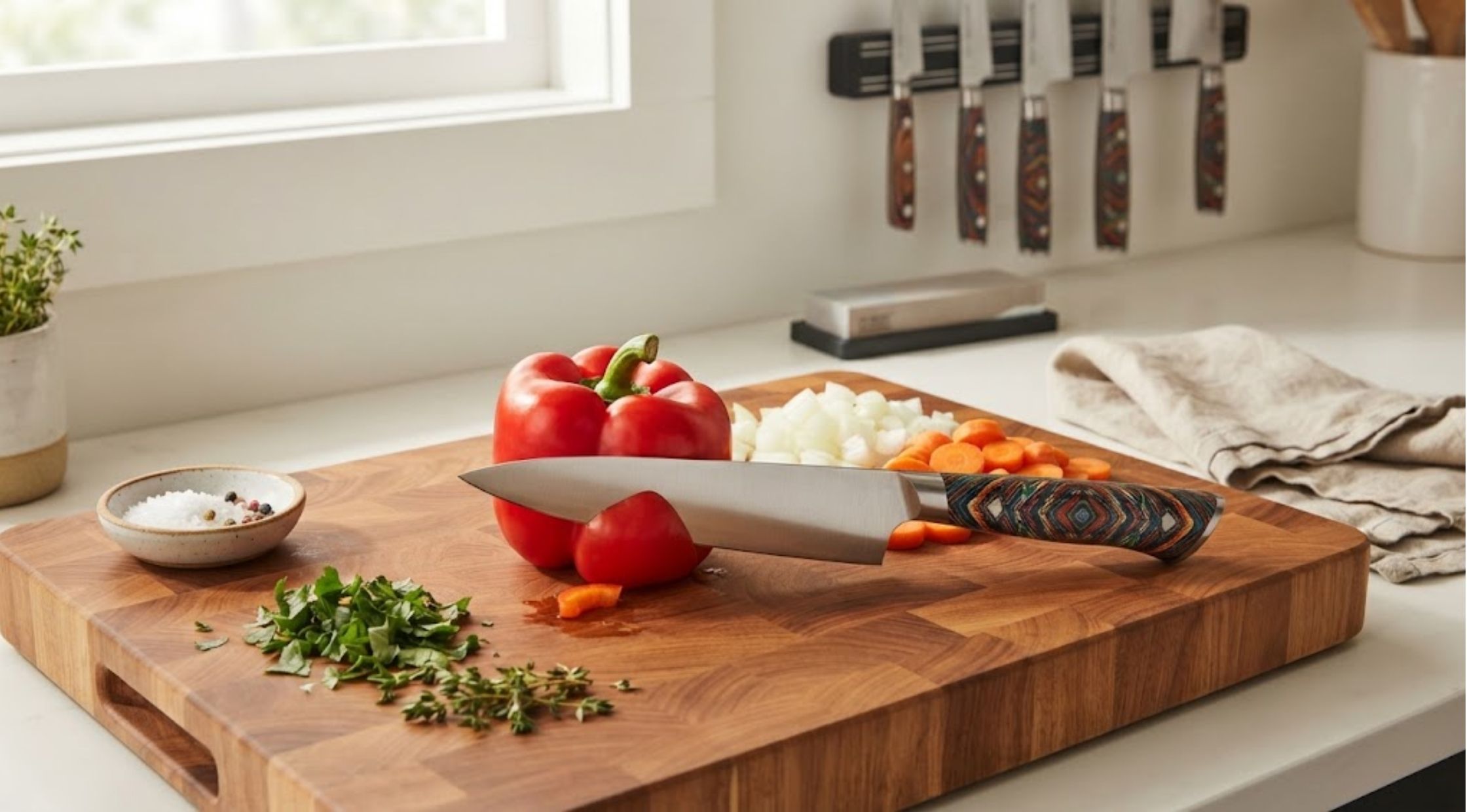
Your cooking routine should guide your knife selection. For example, frequent vegetable preparation requires versatile blades. Meanwhile, other cooks may prioritize slicing, carving, or detailed ingredient preparation. For most kitchens, a dependable chef knife offers an excellent starting point. It handles numerous everyday tasks without requiring several specialized tools. When evaluating New West KnifeWorks Chef Knives, consider blade size and handling. Also, examine the knife’s overall construction before making your choice. Finally, match your preferred cutting technique with the knife you select.
Build a Practical Knife Setup
You do not need dozens of knives for efficient meal preparation. Instead, choose versatile knives for your most common kitchen tasks. A chef knife handles chopping, slicing, dicing, and other general preparations. Meanwhile, a utility or paring knife handles smaller, detailed tasks. Additionally, a serrated knife slices bread and foods with delicate interiors.
Prioritize Comfort During Repeated Preparation
Comfort matters when you prepare several ingredients at once. Therefore, choose a knife that feels natural throughout each cutting task. An awkward grip can make routine preparation unnecessarily tiring. Therefore, consider the handle shape, weight, and balance before choosing. Also, evaluate how the knife feels during different cutting motions. New West KnifeWorks Kitchen Knives can complement a carefully planned kitchen setup. Instead of collecting unnecessary pieces, choose knives that support your cooking routine. Additionally, select options that match your regular preparation needs.
Choose Quality Construction for Long-Term Use
A premium knife can provide benefits beyond immediate cutting performance. Moreover, quality construction can support reliable handling and consistent everyday use. However, you still need proper maintenance after purchasing a quality knife. First, maintain your knife’s edge according to the manufacturer’s recommendations. Additionally, always use an appropriate cutting surface during food preparation. Therefore, avoid unnecessary abuse that could damage your quality knife. Furthermore, hand washing can help protect many premium kitchen knives. After cleaning, dry the blade thoroughly before storing it. Finally, these simple habits can help preserve your knife investment.
Think About Value Beyond the Price Tag
A low-cost knife may seem attractive at first. However, frequent replacements can increase your overall spending. Poor handling can also make cooking less enjoyable. Instead, evaluate each knife by its construction, usability, maintenance, and expected lifespan. This approach helps you focus on long-term value instead. Therefore, avoid judging a knife solely by its purchase price. Moreover, New West KnifeWorks Knives suit cooks who value thoughtful knife design. Their approach also supports everyday functionality in the kitchen. Therefore, they offer an option beyond basic kitchen tools.
Upgrade Your Kitchen With Purpose
A premium knife should solve genuine problems, not simply add another item. First, identify the cutting tasks that currently cause frustration. Then, choose a blade that directly addresses those specific needs. For example, frequent vegetable preparation may justify a versatile chef knife. Meanwhile, detailed preparation may require a smaller blade. Similarly, bread lovers may benefit from a dedicated serrated knife. Therefore, this strategy prevents unnecessary purchases and builds a functional kitchen collection. It also helps you understand specialized and multipurpose knife differences.
Make Better Knives Part of Better Cooking Habits
The right knife can improve preparation, but good habits complete the experience. First, keep your cutting board stable before you start. Then, use controlled motions instead of applying excessive force. Also, maintain your blades regularly to preserve their performance. Additionally, store your knives safely after each use. These habits protect your knives and improve your kitchen workflow. If you want premium options, consider New West KnifeWorks Kitchen Knives. These knives can support a more deliberate and efficient kitchen setup. Therefore, choose pieces that genuinely match your cooking requirements.
Make Your Knife Choice Work Harder
Choosing kitchen knives becomes easier when you focus on your cooking needs. First, consider your regular ingredients, cutting techniques, and preparation frequency. Then, evaluate sharpness, balance, comfort, construction, and maintenance requirements. Moreover, thoughtful selection can reduce frustration during everyday food preparation. It can also make cooking more enjoyable and efficient. Additionally, careful choices prevent you from wasting money on unused knives. Ultimately, New West KnifeWorks Chef Knives can support efficient kitchen preparation. Other carefully selected blades can also improve your cooking experience. Therefore, compare your needs carefully before upgrading your knife collection. Finally, combine quality tools with proper care for better control. As a result, every preparation session can feel more controlled and enjoyable.