
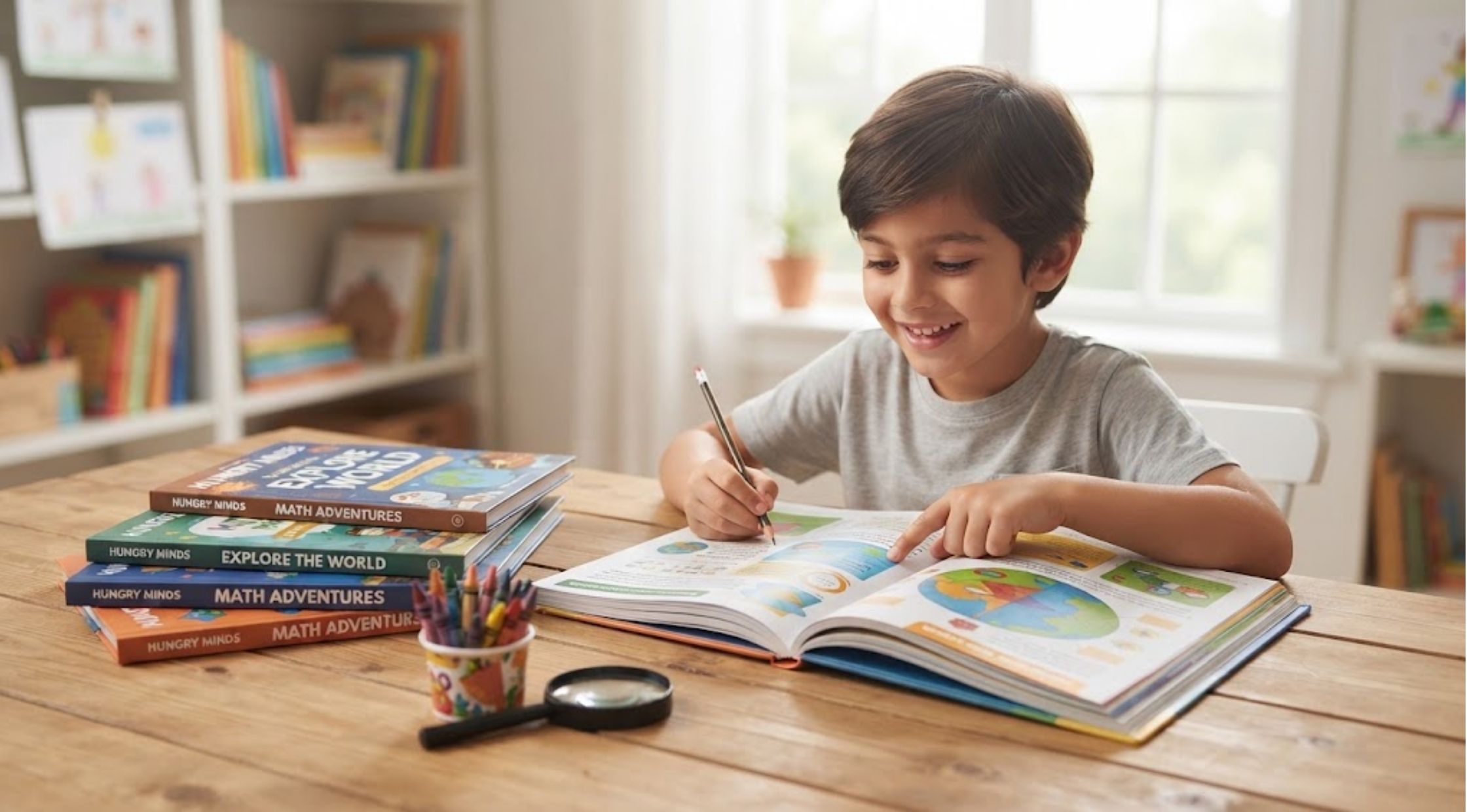
Learning can frustrate children when they struggle to focus or understand new concepts. Moreover, parents often buy several resources, but their children quickly lose interest. Random worksheets may provide practice, yet they rarely create an engaging learning routine. Therefore, Hungry Minds educational books can make learning more enjoyable and productive.
Why Children Often Struggle With Learning
Unstructured Learning Creates Confusion
Children need clear learning paths that match their abilities. However, many learning materials introduce concepts without enough explanation. Consequently, children may memorize information without truly understanding it.
Repetitive Activities Reduce Interest
Children naturally enjoy variety and discovery during their learning experiences. However, repetitive exercises can make study sessions feel like a chore. As children lose interest, they may avoid reading or practicing altogether.
Age-Inappropriate Content Causes Frustration
Learning materials should match each child’s developmental level. However, advanced books can overwhelm younger learners. Similarly, overly simple activities can bore children who need greater challenges.
How to Build a Better Learning Routine
Start With Your Child's Learning Needs
Learning materials should match each child’s developmental level. However, advanced books can overwhelm younger learners. Similarly, overly simple activities can bore children who need greater challenges.
Choose Interactive Learning Materials
Next, choose books that encourage children to participate actively. Additionally, puzzles, exercises, illustrations, questions, and practical activities can increase engagement. Moreover, interactive content helps children apply new concepts through meaningful practice. As a result, children can develop stronger understanding through regular hands-on activities.
Keep Study Sessions Short and Consistent
Long study sessions can quickly overwhelm young learners. Instead, create short daily sessions that feel manageable. For example, parents can schedule 20–30 minutes of focused learning each day. Moreover, consistent practice gradually builds stronger study habits without unnecessary pressure.
Make Educational Books Part of Everyday Learning
Connect Books With Real-Life Activities
Children often understand concepts better when they see practical examples. For instance, parents can connect mathematics with shopping or cooking. They can also connect vocabulary lessons with conversations and everyday objects. Moreover, this approach makes learning feel useful rather than purely academic. Furthermore, children remember concepts more easily when they apply them.
Encourage Independent Exploration
Parents should also give children opportunities to explore books independently. Moreover, parents can let children choose activities that spark their interest. This approach can increase motivation and encourage active learning. However, parents should guide children when they encounter difficult concepts. Therefore, this balance promotes independence while providing necessary support.
Discover a Smarter Educational Resource
Finding suitable learning materials can take considerable time. Therefore, parents may compare books, formats, subjects, and age levels before deciding. Moreover, Hungry Minds Educational Books offers families a convenient approach to structured learning. These educational books support children across different learning stages. Additionally, they make study sessions more engaging and enjoyable. Instead, parents can choose resources that support consistent learning. Furthermore, they can avoid relying on disconnected learning materials. A well-selected educational book can strengthen a child's daily learning routine. Consequently, parents can add practical and structured resources to everyday study sessions.
Benefits of Choosing Quality Learning Resources
Better Engagement
Well-designed books can make learning an enjoyable experience. Moreover, engaging layouts encourage children to participate actively. Additionally, age-appropriate exercises help children stay interested and improve their learning.
Stronger Understanding
Quality educational content prioritizes comprehension instead of simple memorization. Moreover, children can repeatedly practice concepts and gradually build confidence.
Convenient Home Learning
Parents can use books whenever children need extra practice. Moreover, these books support after-school learning, revision, and holiday activities.
Greater Learning Confidence
Children often gain confidence when they understand challenging concepts. Moreover, regular practice helps them recognize their improvement and celebrate progress.
How to Choose the Right Books
Before purchasing, consider your child’s age, interests, and current abilities. Also, check whether the content matches your child’s learning level. Moreover, choose activities that encourage participation instead of passive reading. Parents should also prioritize clear explanations and useful practice exercises. Additionally, good learning resources should support progress without overwhelming children. For convenient browsing, the Hungry Minds Online Store offers educational resources together. Furthermore, parents can explore different options in one focused selection. This approach simplifies searching and reduces frustration from comparing unsuitable materials.
Create a More Effective Learning Experience
Educational books work best when parents provide encouragement and consistency. Therefore, celebrate small achievements and avoid making every activity feel like a test. Furthermore, let children ask questions and make mistakes freely. These mistakes often create valuable opportunities for children to understand difficult concepts. Additionally, alternate reading with written activities, puzzles, and practical exercises. This variety keeps learning fresh and supports different skills.
Conclusion
Children do not need endless worksheets or complicated study schedules. Instead, they need suitable resources, consistent practice, and positive encouragement. Moreover, the right books can simplify difficult concepts and encourage enjoyable learning habits. Hungry Minds Books offers practical options for parents seeking engaging educational resources. By choosing age-appropriate materials, parents can build consistent and effective learning routines. Consequently, families can create more positive and productive learning experiences. Therefore, make every learning session purposeful, enjoyable, and suited to your child's needs.